Showing posts with label Tate Museum. Show all posts

Sunday, June 19, 2011

How the Vorticists Defied the World (and Definition)


If the Vorticism movement had a headstone, it would confidently read “Here Lies Vorticism, 1914-1919.” Perhaps no other art movement had such a cut and dried beginning and end, yet no other art movement has been so poorly defined, even today. Great, yet slightly mad, minds such as Wyndham Lewis and Ezra Pound tried their best, but strayed more into mysticism than method when attempting to put Vorticist imagery into words. The Vorticists: Manifesto for a Modern World, at the Tate Britain through September 4, 2011, attempts to make sense of the Vorticists as well as reposition them in the greater scheme of modern art. The Vorticists were rebels with a nebulous cause, but the passion of their rebellion and the art it produced still draw us into their vortex. Please come over to Picture This at Big Think to read more of "How the Vorticists Defied the World (and Definition)."

[Image: David Bomberg. The Mud Bath, 1914. © Tate.]

[Many thanks to the Tate Britain for providing me with the image above and other press materials from The Vorticists: Manifesto for a Modern World, which runs through September 4, 2011.]
Wednesday, January 19, 2011

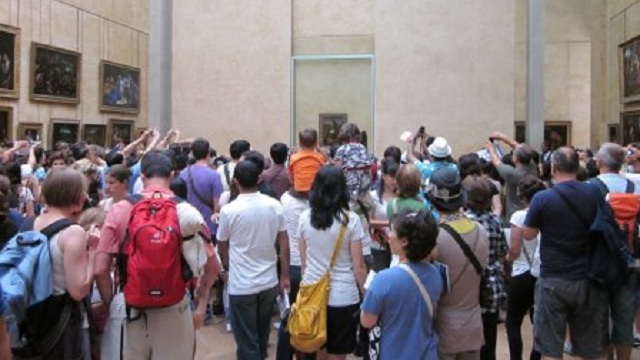
Anger Management: Fighting the Crowds at Blockbuster Art Shows


Great art can sometimes be like a magnet—attracting hordes of admirers. The Gauguin: Maker of Myth exhibition that recently closed at the Tate Modern in London, England, drew more than its fair share of fans. According to some patrons, it was far more than a fair share, as complaints that the crowds took away from their enjoyment of the show mount. Is it fair that some people seem to “hog” the art and deny others the lingering look they desire? Or is such box office success the price to pay to see great art in great quantities brought to your locale? How can the anger such blockbuster shows generate be managed? Please come over to Picture This at Big Think to read more of "Anger Management."

Tuesday, October 19, 2010

Seeds of Destruction: Dustup at the Tate Modern


Art is good for the soul, but sometimes it can be bad for your health. Chinese artist Ai Weiwei’s Sunflower Seeds installation at the Tate Modern in London aroused curiosity before it began affecting visitors’ respiratory systems with the porcelain dust it threw off. Sadly, this is just the latest hazardous episode in the nine-year history of the Tate Modern’s “The Unilever Series” program of featuring installation art by the hottest contemporary artists. But are these blockbuster shows pushing the envelope beyond the limits of public safety? Please come over to Picture This at Big Think to read more of "Seeds of Destruction."

Tuesday, May 25, 2010

Give Peace a Chance: Peacenik Picasso at the Tate Liverpool


PRESS IMAGE SHEET

“How could you conceivably cut yourself off from other men and from the life they bring you in such abundance? In the name of what uncaring, ivory-tower kind of attitude?” Pablo Picasso said in a 1944 interview discussing the political nature of much of his painting. “No; painting is not there merely to decorate the walls of flats. It is a means of waging offensive and defensive war against the enemy." Picasso never felt comfortable with the false neutrality that many other artists espoused in the face of tyranny. Picasso: Peace and Freedom at the Tate Liverpool in London gathers together the political Picasso and provides a template for all thinking and feeling people on how to wage war artistically, to stand up for what you believe in, and, most importantly, to give peace a chance. Please come over to Picture This at Big Think to read more of "Give Peace a Chance."


[Image: Pablo Picasso. Dove in Flight in Rainbow, 23 October 1952. Lithograph 55.2 x 74.8 cm. Photo © Graphikmuseum Pablo Picasso Münster, Germany. © Succession Picasso/DACS 2010.]


[Many thanks to the
Tate Liverpool, London, for providing me with the image above and press materials for Picasso: Peace and Freedom, through August 30, 2010.]